Final Ank Satta Matka: The Ultimate Player's Guide
August 8, 2024 · By Prabhat M.
What the Final Ank Actually Is
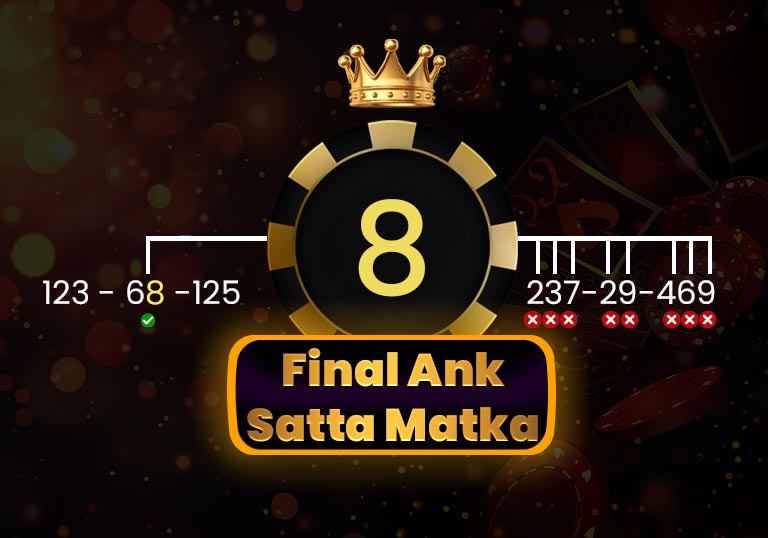
The Final Ank is the single closing digit attached to a market's result for the day. Satta Matka runs on numbers, and after the panels are declared this one figure becomes the headline everyone quotes. It is called an "ank" because ank simply means digit, and "final" because it is the reduced, end-point number rather than the raw draw. It does not appear from nowhere; it is the last step of a short, repeatable calculation built on the day's panels.
How the Final Ank Is Worked Out
The exact handling shifts a little between markets, but the core method is the same across the boards. You take a declared panel, add its digits, and reduce the total to a single figure.
A Worked Example
Say the close panel for a market is declared as 457. To find its ank:
- Add the three digits: 4 + 5 + 7 = 16.
- The result is two digits, so keep only the last one: 16 becomes 6.
- That closing digit, 6, is the ank for this panel.
Now pair it with the open side. Suppose the open panel was 123: 1 + 2 + 3 = 6, ank 6. The two anks together form the jodi 66, and the close-side digit is the figure most people mean when they say the day's Final Ank. The rule that matters: whenever a total crosses 9, you drop the tens and keep the units. So 14 to 4, 21 to 1, 20 to 0, and so on.
Reading the Final Ank Sensibly
The Final Ank is not a shortcut to a win, but a steady approach makes the game far easier to follow. Regular followers tend to keep a few habits in mind:
- Learn your market's routine first. Open and close times and the way each board reduces its panels differ slightly, so know the specific game before reading too much into its ank.
- Study the history. Past charts show how often a given ank has surfaced and how it tends to move week to week. Frequency is information, not destiny.
- Stay disciplined. Decide your limits before you start and stick to them. Patience beats impulse every time.
- Use dependable sources. Pull panels and anks from a platform that publishes consistently and on schedule, so the figure you read is the figure that was declared.
Where the Final Ank Fits in the Day
It helps to see the Final Ank as one link in a chain rather than a standalone number. The day starts with the open panel, which reduces to the open ank. Later the close panel is declared and reduces to the close ank. The two anks together make the jodi, and the close-side digit is what most people quote as the Final Ank. Read in that order, the figure stops feeling mysterious: it is simply the tail end of a sequence that anyone can follow with a pen and the declared panels. Knowing the sequence also helps you sanity-check what others tell you, because if someone quotes a Final Ank that does not match the arithmetic of the declared panels, you know to be sceptical.
Myths Worth Letting Go
The biggest myth is the "guaranteed" or "fixed" Final Ank. No formula, leaked tip, or pattern can remove the element of chance that defines the game. Anyone selling certainty is selling something that does not exist. A few others worth dropping:
- "A repeated ank is due to repeat (or due to stop)." Past frequency does not load the next result either way. The chart describes history; it does not bind the future.
- "There is one secret calculation everyone hides." The reduction method is simple arithmetic, shown above. There is no hidden formula, only the public panels and basic digit-adding.
- "The Final Ank decides everything." It is one figure among open panels, close panels and jodis. Treating it as the whole game ignores the rest of the picture.
Frequently Asked Questions
Is the Final Ank the same as the jodi?
No. The ank is a single digit drawn from one panel. The jodi is the two-digit pair formed by the open ank and the close ank together. In the example above, the open ank 6 and close ank 6 produced the jodi 66.
Why does my calculation sometimes give a two-digit total?
Because adding three digits can exceed 9. When it does, you drop the tens and keep the units, so 16 becomes 6 and 21 becomes 1. The ank is always a single digit from 0 to 9.
Can anyone guarantee tomorrow's Final Ank?
No, and you should treat anyone who claims to with suspicion. The number is the outcome of a chance-based draw. Studying charts sharpens your understanding, but it can never override luck.
Final Thoughts
Getting comfortable with the Final Ank comes down to three things: understanding how the digit is formed from a panel, reading charts with a calm head, and keeping your expectations realistic. The followers who enjoy the game most treat it as informed observation rather than a guaranteed payday. Learn the arithmetic, watch the patterns, and never lean on promises of certain results.
About the author
Written by the Tiger Prabhat editorial team — players and result-watchers who have followed Prabhat and Satta Matka markets for years, bringing you fast, accurate results and clear guides.